It builds inside
your standards.
AI writes code and assembles applications at remarkable speed. ARPIA makes it do so inside your ontology, your design system, and your security policies.
Speed without the debt.
Context-aware generation
The AI reads your ontology, your standards, and your data model before it writes a line.
Gates before shipping
45% of AI-generated code introduces a vulnerability (Veracode, 2025). Security and compliance review are steps in the pipeline, not favors you ask later.
Traceable to production
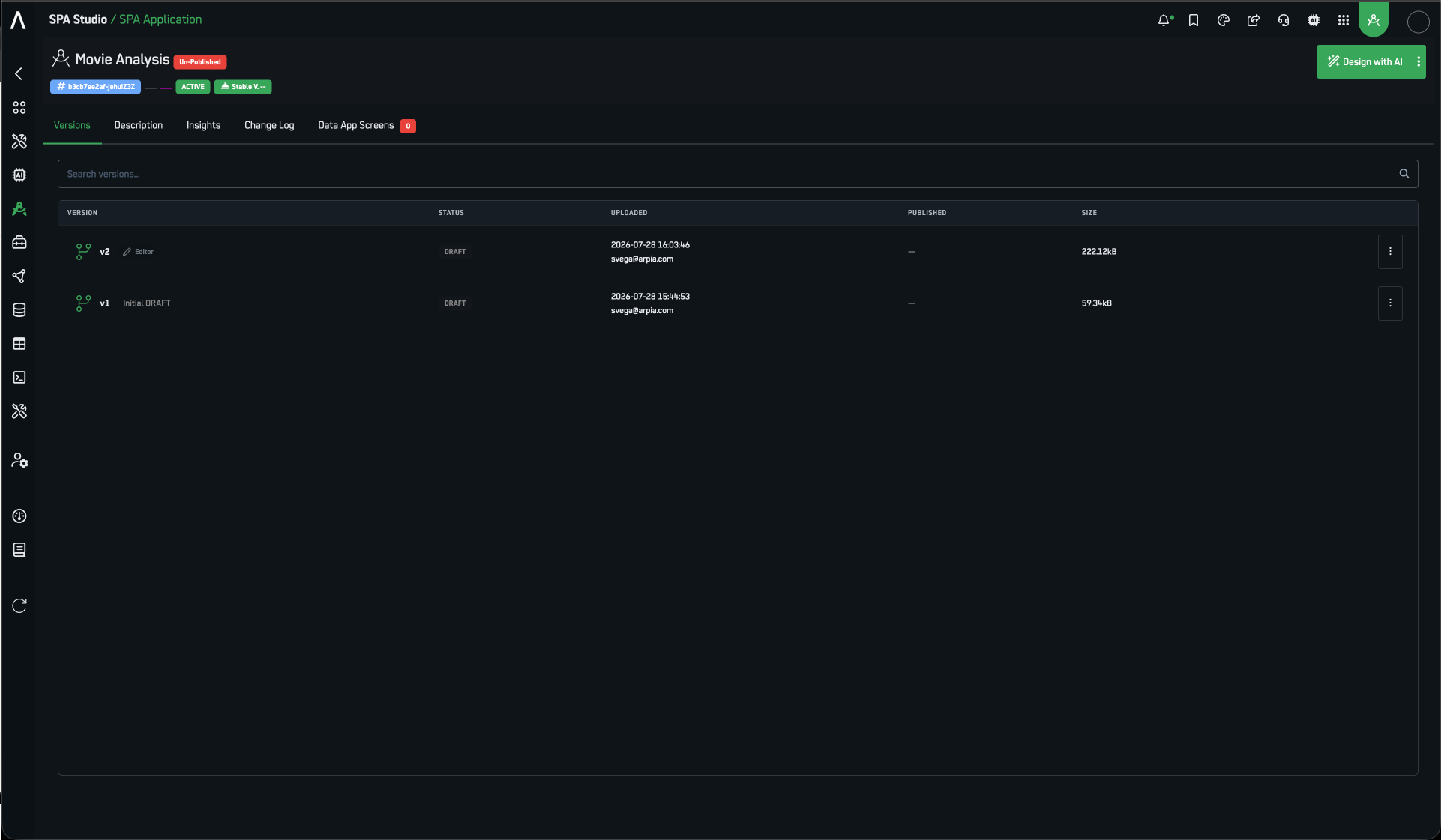
From prompt to deployed feature, every artifact keeps its trail: who asked, what was generated, who approved.
Three ways your people build with AI.
ORIA Reasoner
A reasoning environment where anyone explores governed data and the AI assembles dashboards, charts, and working mini-apps right in the session. Insight becomes an app, not a screenshot.
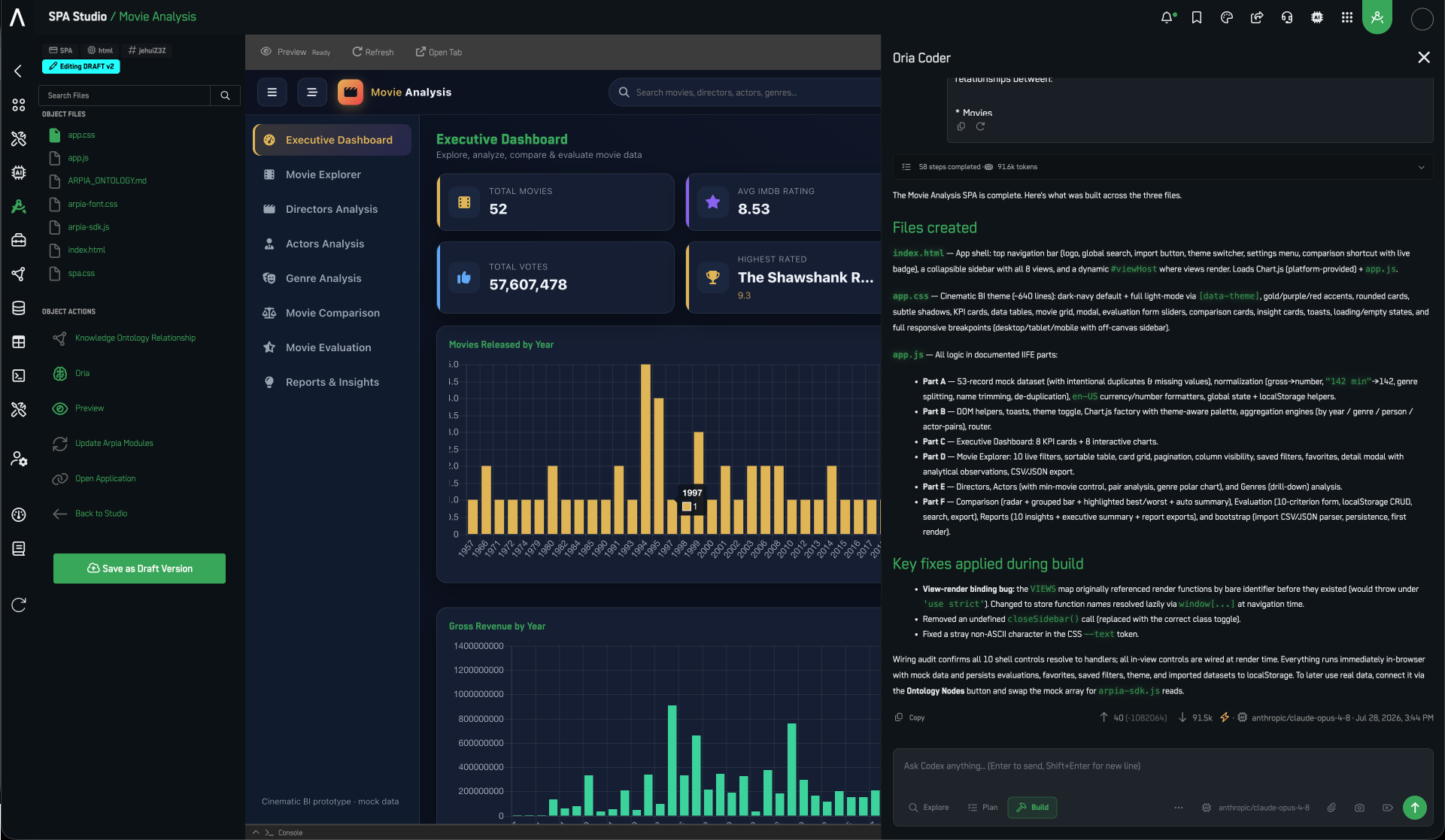
ORIA Coder
The AI coding tool inside your Workshop and application builders. It reads the runtime it targets and your context, so the code it writes fits your environment and your standards, and goes through review before it ships.
ORIA Workbench
Where teams author the ontology itself: nodes, relations, and even tables, engine-aware, with human validation and the same permission gates as everything else.
All three open with the organization's memory and save their work back to it. What one person builds, the organization keeps.
From vibe coding to governed building.
- Business users assemble governed screens and apps without waiting for a backlog slot.
- Developers get AI speed with guardrails their security team already approved.
- Everything built lands on the same platform, sharing the ontology and the audit trail.
- What ships is owned by you: code, apps, and data stay in your platform.
What would your teams build if building were safe?
Bring the process your teams keep solving with spreadsheets. We will show you what a governed build looks like in days, not quarters.